A UX research, UI design and development case study exploring editable comments with full audit history — so teams can iterate faster without losing accountability.
To respect the NDA agreement with the employer, the displayed UI screens are recreated representations of the original interfaces.
What am I solving here?
Problem Statement
In a B2B quoting workflow, comments attached to submitted quotes serve as the primary channel for internal and external collaboration. When a user spots an error or wants to clarify a comment after hitting "Submit," there was simply no way to fix it.
This produced a chain of problems:
Users would have to edit the whole quote just for the sake of editing the comment.
More number of re-quotes leads to wastage of database space.
Increased data fetch time, make the site feel slow.
Context of comment buried and polluting the comment thread with noise
Four Goals
Allow users to correct or update comments post-submission
Preserve a transparent edit history for accountability
Keep the experience lightweight — no complex flows
Maintain design consistency with the site.
My role on this
End-to-end UX Research and UI design.
Identifying user pain points through workflow analysis
Designing and developing the edit modal and history popup.
Maintain consistent design.
Utilize existing popups and table design.
How am I going to solve it?
The solution required understanding the full lifecycle of a comment, from initial submission to post-submission editing and designing an experience that felt natural without compromising accountability.
Transparency
Every edit must be visible. Users should know a comment was changed and when.
Simplicity
The edit action should feel like a native extension of the existing comment UI — not a separate workflow.
Accountability
Preserve a full edit history so stakeholders can trace the evolution of any comment.
Minimal friction
No heavy confirmation flows — just a focused modal with clear intent: edit and submit.
What is the actual problem?
Comments in the quote system were treated as immutable records post-submission. While this preserved a kind of raw integrity, it didn't reflect how B2B communication actually works — iteratively, with corrections.
The knock-on effects were significant: bloated comment threads, loss of context as corrections got buried, and user frustration with a system that penalised honest mistakes.
The ROOT cause
The real issue wasn't just a missing "Edit" button — it was that the system conflated immutability with auditability. These are not the same thing.
What is the solution proposed?
We introduced editable comments with a tracked history — giving users the ability to correct or update any comment after submission while maintaining a transparent audit trail.
The solution has three components:
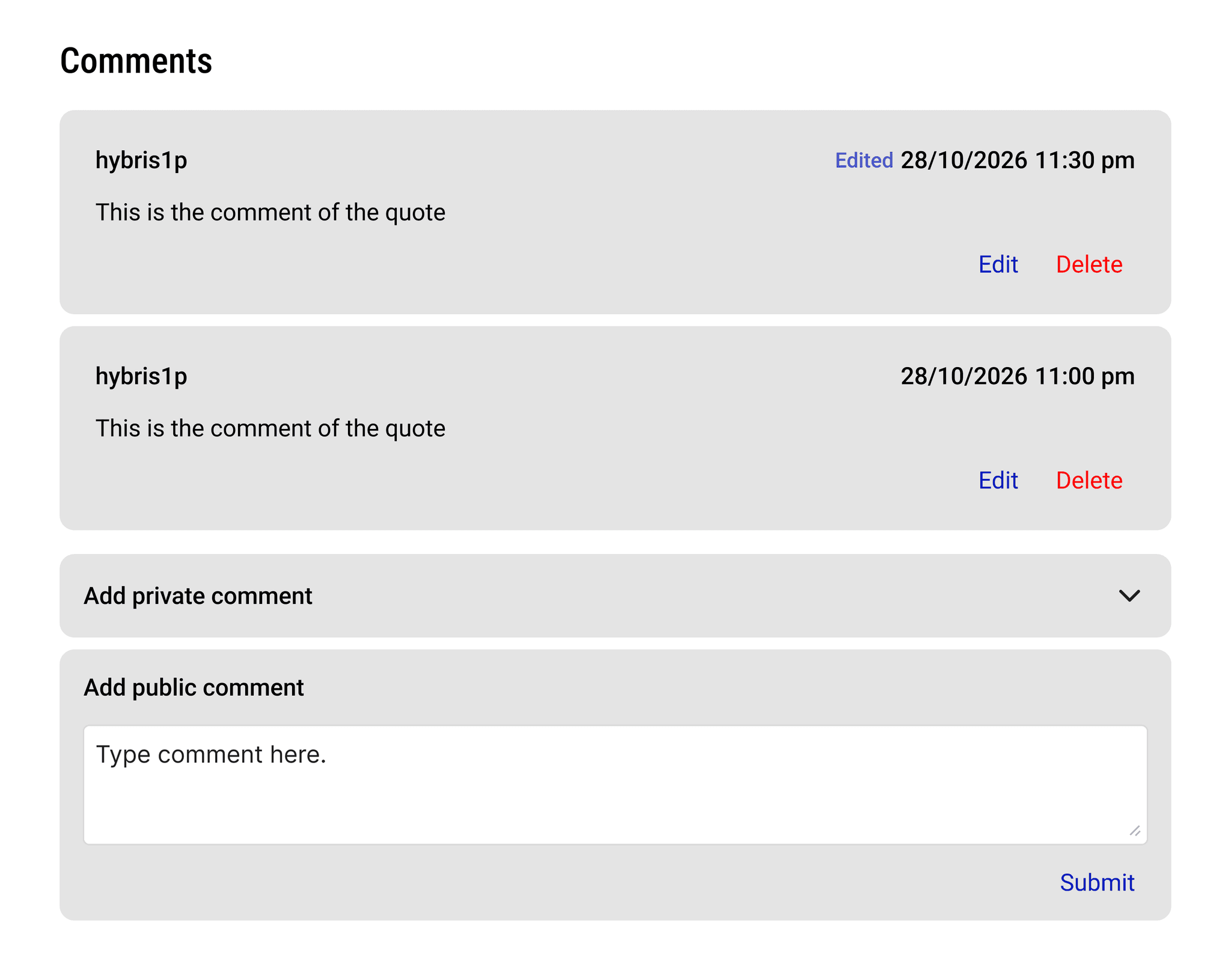
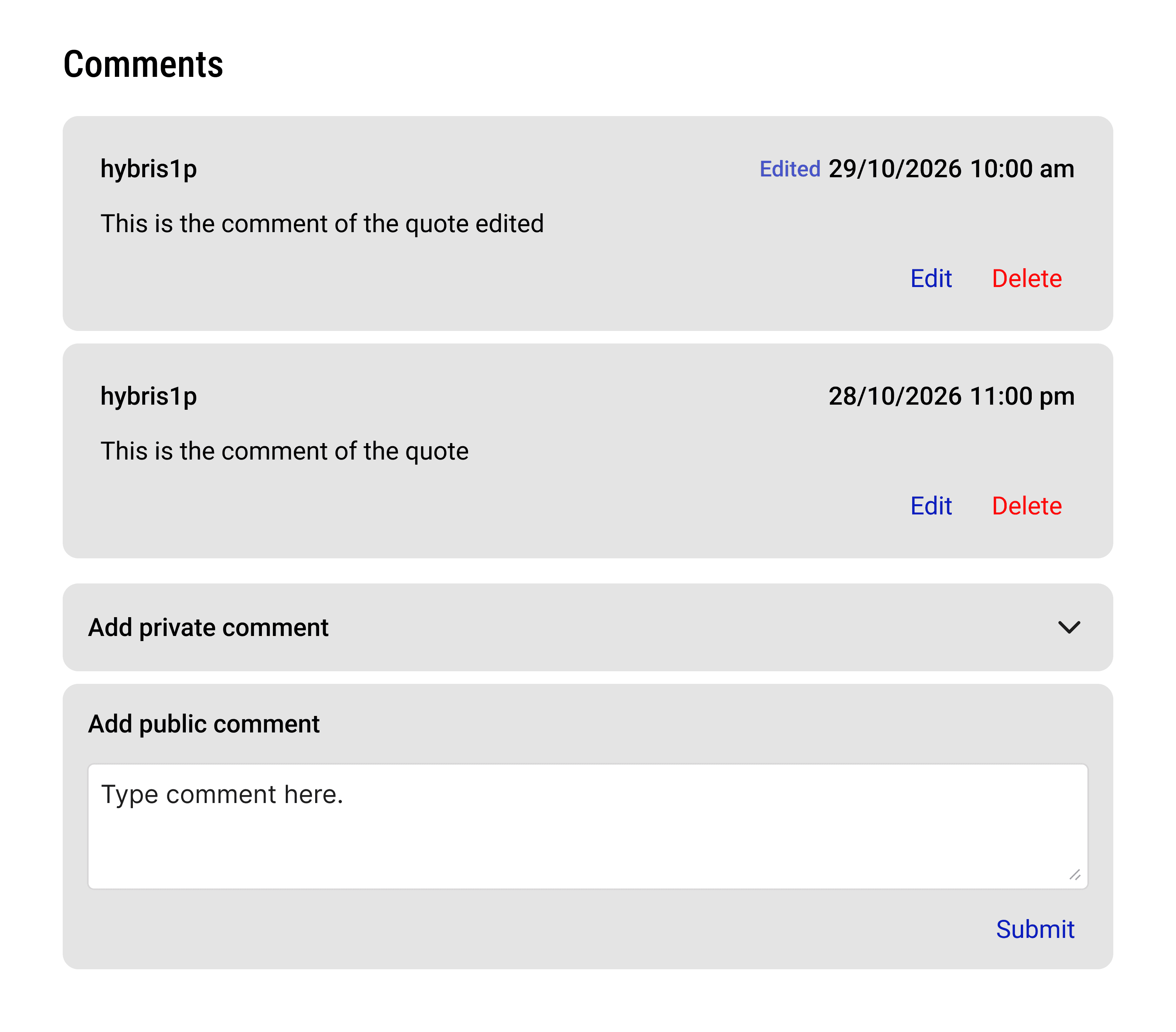
Main Comments View — Edit & Delete actions per comment
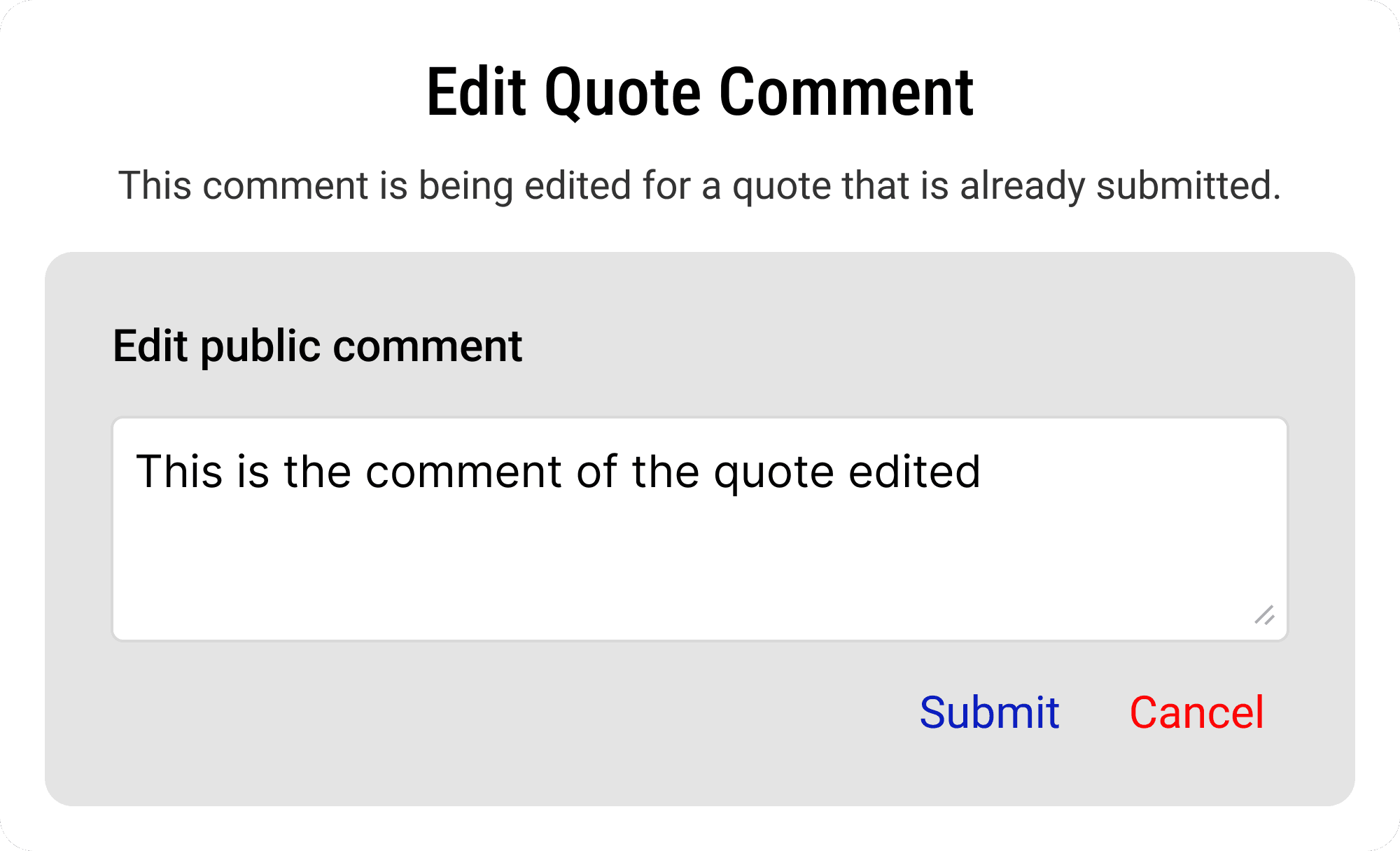
Edit Quote Comment — Inline modal for editing public comments
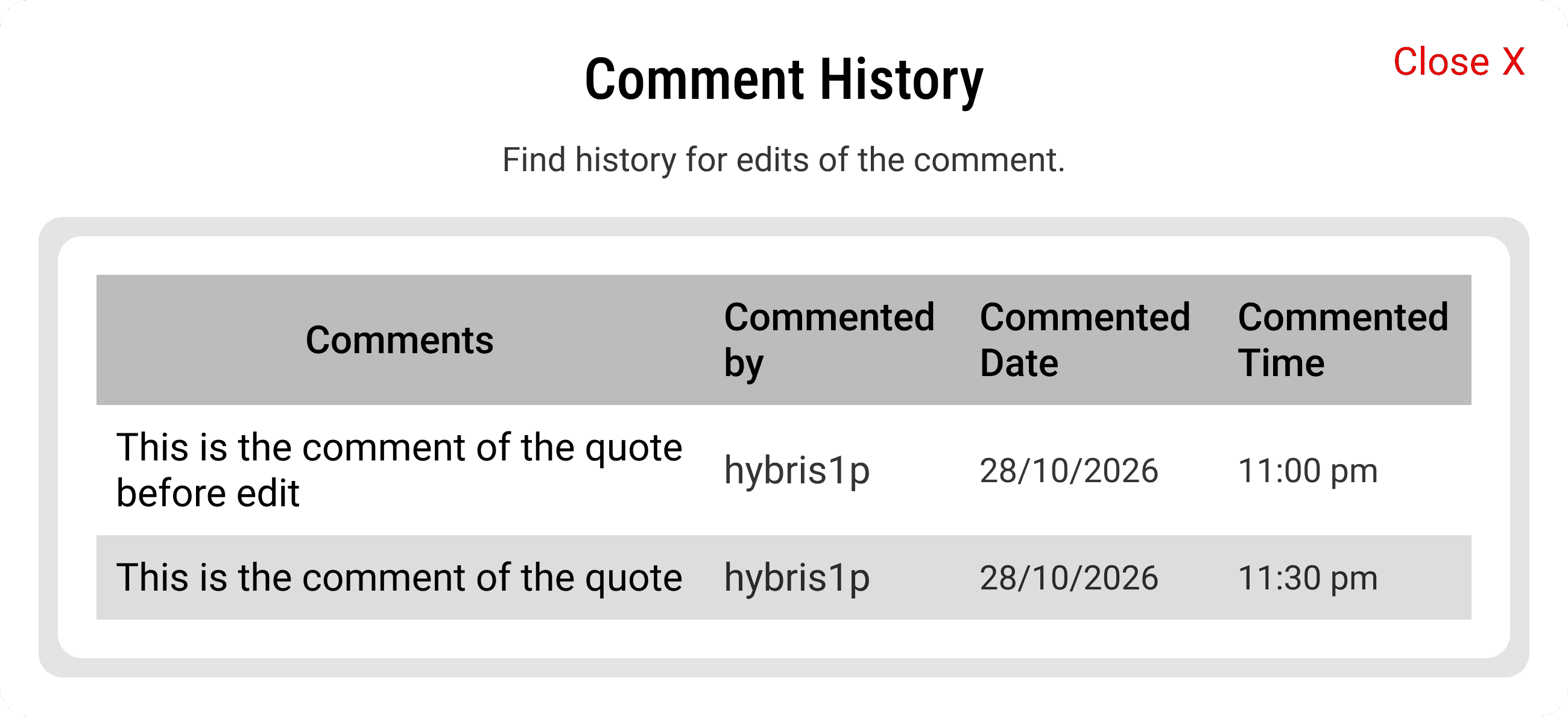
Comment History — Full audit trail of all edits
What are the decisions taken?
Should an edit be visible to others?
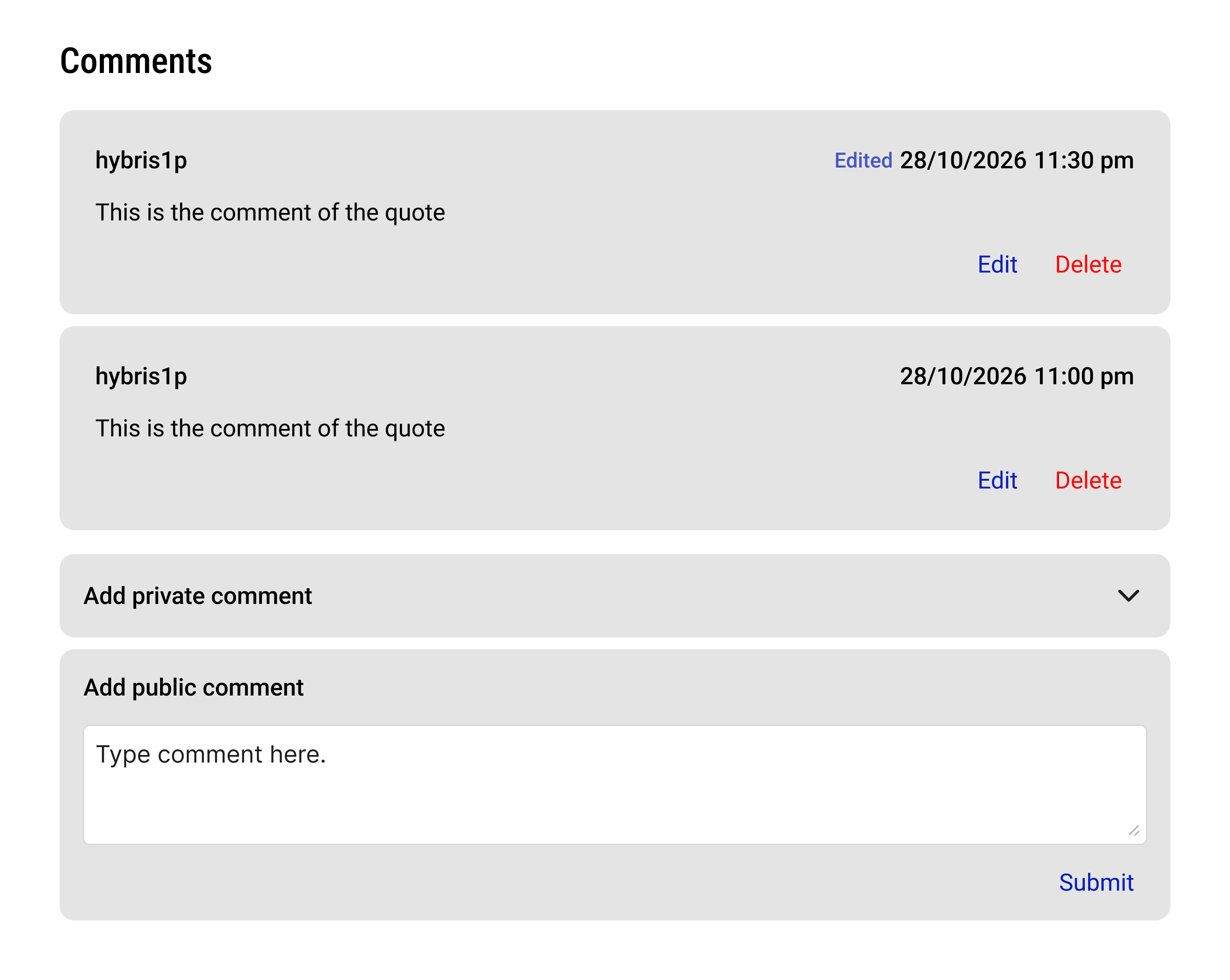
Edited comments are marked with a blue "Edited" label and an updated timestamp — anyone reading the thread immediately knows the comment was changed and when.
Visible label
Where does editing happen?
Edits happen in a focused modal that surfaces the current text under a clear "Edit public comment" heading — reducing risk of accidental edits and keeping context tight.
Focused modal
Is the history always visible?
No — the edit history lives in a dedicated popup accessible on demand. It doesn't clutter the main thread for users who don't need it.
Popup on demand
Submit / Cancel pattern
Clear destructive vs. primary action colours — red for Cancel, blue for Submit — align with existing design system conventions.
Design system
How does it work?
What are the benefits implementing this?
The feature reduces friction in one of the most common pain points of the quoting workflow — without sacrificing the auditability that B2B teams depend on.
🧹
Cleaner comment threads — no more correction chains
No more correction chains. Users fix mistakes in place — reviewers see one accurate comment, not three stacked ones trying to walk it back.
🔍
Full edit history for compliance and review
Every edit is logged with author, date, and time. Reviewers and auditors can trace the full evolution of any comment on demand.
⚡
Faster iterations on quote details
Corrections that previously required a back-and-forth on Slack now happen directly in the platform. Approvals move faster.
✅
Reduced cognitive load for reviewers
The solution reuses the existing comment submission infrastructure — adding a history table and edit modal with no architecture overhaul.
🤝
Higher trust in the comment record
When the comment thread is accurate and auditable, both sides of a quote negotiation can rely on it — reducing disputes and clarification loops.
📉
Fewer redundant support escalations
Many support tickets stem from "which comment is correct?" confusion. Editable comments with history eliminates this class of issue entirely.